When a traveler asks ChatGPT who to book a guided trip with, does your name come up? More of your future guests are asking. Phocuswright found that 56% of US leisure travelers used AI for at least one trip in the past 12 months (Phocuswright, 2026). So we put AI travel recommendations to the test: which tour operators come back, and why?
We asked 100 trip questions, three days running, and read what came back.
How did we run the study?
We wrote 100 trip prompts: 20 destinations, each asked in 5 trip styles. The styles were small-group tours, family trips, solo travel, luxury and honeymoon, and active and adventure.
Every prompt asked for operators by name. A typical one: "Plan a 10-day small-group tour of Peru with Cusco, the Sacred Valley and Machu Picchu for a couple in their 60s. Which tour operators would you recommend, and why?"
- Two AI tools: ChatGPT with web search, and Google's AI Mode, both asked from the United States.
- Three runs, on 14, 15 and 16 November 2026. That gave us 600 answers.
- We collected the answers with an AI answer tracking tool, which also picked out the brand names.
- We sorted the 1,619 names it found into tour operators, booking sites, hotels and everything else, such as car brands, museums and national parks. Different spellings of the same company were merged.
- For the "why", we read nine full answers covering every trip style and both tools.
Key numbers
These figures come from our study of 600 AI answers (SuperMoo, November 2026, method above) unless another source is named.
- 98.8% of answers named at least one tour operator.
- More than 650 different tour operators were named.
- Intrepid Travel appeared in 36.5% of answers, and G Adventures in 35.5%.
- Destination specialists took 59% of operator mentions.
- 26% of the operators ChatGPT named for a trip appeared in all three runs. For Google AI Mode it was 13%.
- For the same trip on the same day, ChatGPT and AI Mode named no operator in common 32% of the time.
- 29% of AI Mode answers named a booking site or marketplace, against 5% of ChatGPT answers.
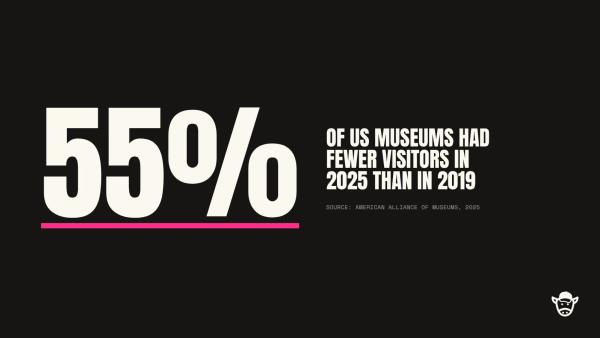
- 56% of US leisure travelers used AI for at least one trip in the past 12 months (Phocuswright, 2026).
- 33% of US travelers used tools like ChatGPT or Gemini for trip research, close to the 35% who used search engines (Phocuswright, 2026).
Which tour operators did AI recommend most?
Two names dominated. Here are the operators named most often, as a share of all 600 answers, with the number of ChatGPT and AI Mode answers in parentheses.
- Intrepid Travel: 36.5% (127 ChatGPT, 92 AI Mode)
- G Adventures: 35.5% (116 ChatGPT, 97 AI Mode)
- Abercrombie & Kent: 9.5% (37 ChatGPT, 20 AI Mode)
- Exodus Travels: 9.2% (41 ChatGPT, 14 AI Mode)
- Audley Travel: 7.2% (29 ChatGPT, 14 AI Mode)
- Flash Pack: 5.5% (29 ChatGPT, 4 AI Mode)
- Lindblad Expeditions: 5.0% (12 ChatGPT, 18 AI Mode)
- Tauck: 5.0% (22 ChatGPT, 8 AI Mode)
- Trafalgar: 4.8% (19 ChatGPT, 10 AI Mode)
- Backroads and Artisans of Leisure: 4.2% each
Intrepid or G Adventures, or both, appeared in 43% of all answers. Between them they were the first operator named 145 times.
Their pull depended on the trip. One or both appeared in 85% of solo travel answers, 61% of family answers and 51% of small-group answers. For active trips it fell to 19%, and for luxury trips to 1%.
So if your trip is a generic "group tour of Thailand for a solo traveler," you are up against two very large brands. Make the trip more specific and the picture changes.
Does AI only recommend the big brands?
No. Across 600 answers, AI named more than 650 different tour operators. Nearly half of them (48%) appeared only once.
We called an operator a destination specialist if it was named for fewer than 4 of our 20 destinations. Specialists took 59% of all operator mentions. They also led the list in 6 of the 20 destinations:
- Japan: InsideJapan Tours, in 17 of 30 Japan answers
- Iceland: Arctic Adventures, in 18 of 30
- Scotland: Rabbie's, in 16 of 30
- Galapagos: Ecoventura, in 16 of 30
- Ireland: Vagabond Tours of Ireland, in 12 of 30
- Tanzania: &Beyond and Asilia Africa, tied on 8 of 30
Active trips belong to local specialists
For active and adventure trips, 88% of operator mentions went to specialists. Ask about the Inca Trail and AI names Peru trekking companies such as Alpaca Expeditions. Ask about Iceland's Laugavegur trail and it names Icelandic mountain guiding firms. The big multi-destination brands rarely led these answers.
Luxury answers recommend hotels as much as operators
Luxury and honeymoon prompts behaved differently. In 63% of those answers, AI named more hotels and lodges than tour operators. That was an average of 4.9 hotels against 3.6 operators per answer, compared with 0.2 hotels per answer for every other trip style. The operators that did appear were luxury trip designers such as Abercrombie & Kent, Artisans of Leisure, Audley Travel and Scott Dunn.
Why did AI pick these operators?
We read nine full answers, covering every trip style on both tools. The same reasons kept coming up.
The first was a local base and a clear specialty, in 8 of the 9 answers. "Based in Cusco, with more than 20 years of Peru experience." "Arusha-based operator with its own fleet."
The second was a specific trip to point to, also in 8 of 9. Answers named itineraries, departure dates and what was included. For a 62-year-old solo traveler to Ireland, ChatGPT picked My Ireland Tour's "Solo & Social" tours. It quoted the cap of 20 travelers and the private room.
Then came the practical details travelers ask about. Safety and logistics came up in 8 of 9 answers, group size in 5, and prices or single supplements in 4.
Reputation showed up in 5 of 9, in phrases like "travelers consistently highlight" and "widely praised." Track record showed up in 4: "dating back to 1978," "more than 20 years."
In three of the five ChatGPT answers we read, ChatGPT linked to an operator's own trip page rather than its home page. One answer called its list "a research shortlist, not an independently verified ranking." The AI Mode answers we read named companies but did not include links.
The pattern is simple. AI recommended operators it could describe in specifics. A tour page that says who the trip is for, how big the group is, when it runs and what it costs gives an AI assistant something to say. It is also what a human reader needs before they book.
How consistent are AI travel recommendations?
Not very. We asked each question three times, a day apart.
- ChatGPT: only 26% of the operators it named for a trip came back on all three days.
- Google AI Mode: 13%.
- The first operator named was the same all three days for 36% of trips on ChatGPT, and 20% on AI Mode.
- For the same trip on the same day, the two tools named no operator in common 32% of the time.
Of the 650 plus operators named, only 153 appeared on both tools. One screenshot of an AI answer tells you very little. To know how AI describes your trips, ask more than once, on more than one tool.
Key concepts
- Google AI Mode
- Google's conversational search mode, which answers a question in full instead of showing a list of results.
- ChatGPT with web search
- ChatGPT answering from live search results and linking its sources, not only from what it learned in training.
- Destination specialist
- In this study, a tour operator named for fewer than 4 of our 20 destinations, such as InsideJapan Tours or Rabbie's.
- Share of answers
- The percentage of AI answers that mention a brand at least once.
- Run-to-run consistency
- How much an AI answer to the same question stays the same when you ask it again on another day.
Do booking sites show up in AI answers?
Less than you might expect. 17% of answers named a booking site or marketplace, and most of those came from Google.
Google AI Mode named one in 29% of its answers, and TourRadar alone appeared in 63 of its 300 answers. ChatGPT named one in 5% of its answers. The rest were rare: TripAdvisor in 10 answers, SafariBookings in 7, Viator in 3 and GetYourGuide in 1.
For most trips, AI sent travelers toward operators directly. That makes your own site, and the direct bookings it can win, matter more.
What does this mean for your trips?
Be the obvious answer for one specific trip
Generic questions went to the biggest brands. Specific ones went to specialists. Pick the trips you want to be known for and give each one its own page, written for the traveler who asks about it. For the other tactics that win bookings, see our guide to getting more tour bookings, ranked by effort and impact.
Put the details on the page
Group size, departure dates, price, single supplement, ages for family trips, fitness level and what is included. These are the facts the answers quoted. Our anatomy of a multi-day tour page shows where each one belongs.
Say where you are based and how long you have done it
In the answers we read, one line like "based in Cusco, with more than 20 years of Peru experience" did a lot of work. Put yours near the top of your about page and your trip pages.
Keep your marketplace listings accurate
If Google's AI Mode names TourRadar for your destination, your listing there may be the first version of you a traveler sees.
Make what guests say easy to find
Five of the nine answers we read borrowed the language of reviews. This study can't measure how much reviews move AI answers. It does show the answers drawing on what guests had said.
Check more than once
AI answers changed from day to day. Ask the same question several times, on ChatGPT and on Google, before you draw conclusions.
For the wider picture of turning visitors into bookings, see our travel conversion playbook, or how we help travel brands put guest proof on their own sites.
What are the limits of this study?
- We asked from the United States, in English, on three days in November 2026.
- We tested two tools, ChatGPT with web search and Google AI Mode. Other assistants may answer differently.
- Every prompt asked for operators by name. A traveler who only asks for an itinerary may see fewer.
- The tracking tool detected the brand names, and we grouped and classified them by hand and by rule. About 450 names that appeared once were left unclassified, so "more than 650 operators" is a floor.
- The reasons come from nine answers read in full, so treat those counts as directional.
Sources
- Phocuswright press release: Majority of U.S. Travelers Now Use AI for Trips (March 2026)
- PhocusWire: AI surge marks behavioral shift in US travel (2026)
- SuperMoo AI trip planning study: 100 prompts on ChatGPT with web search and Google AI Mode, 14 to 16 November 2026, 600 answers (this article)